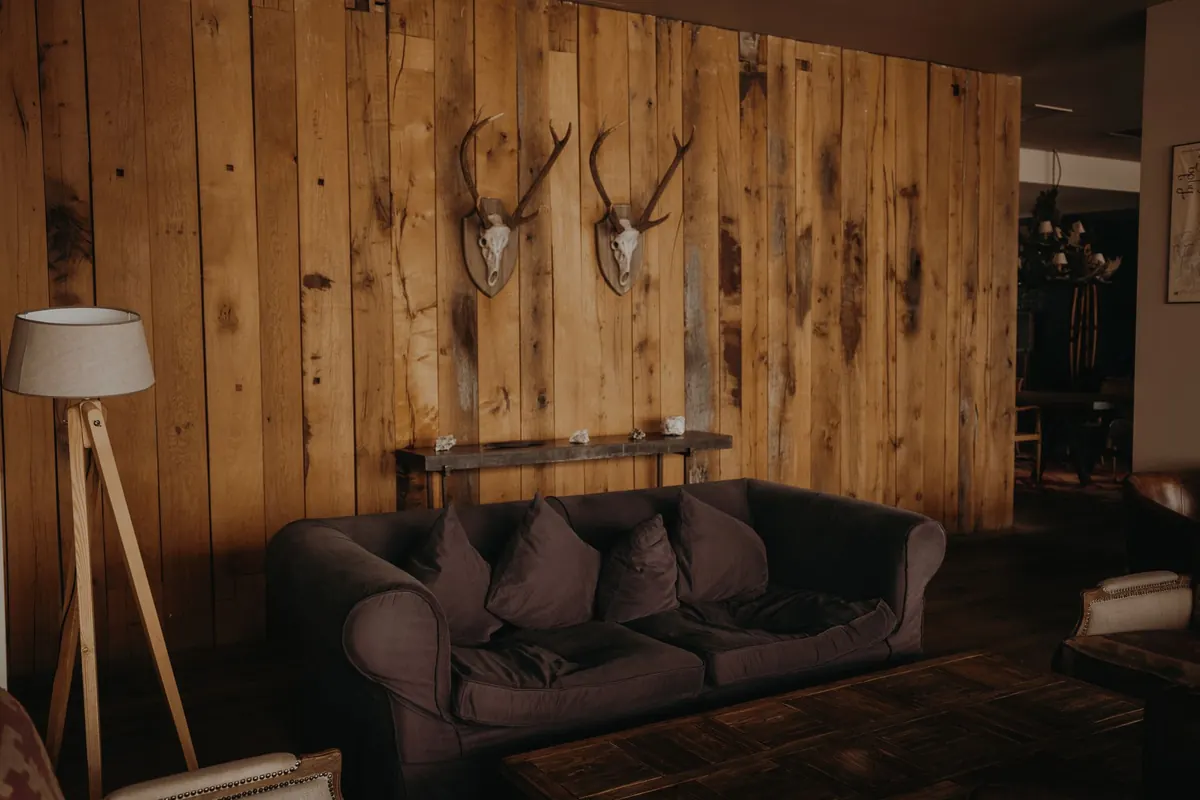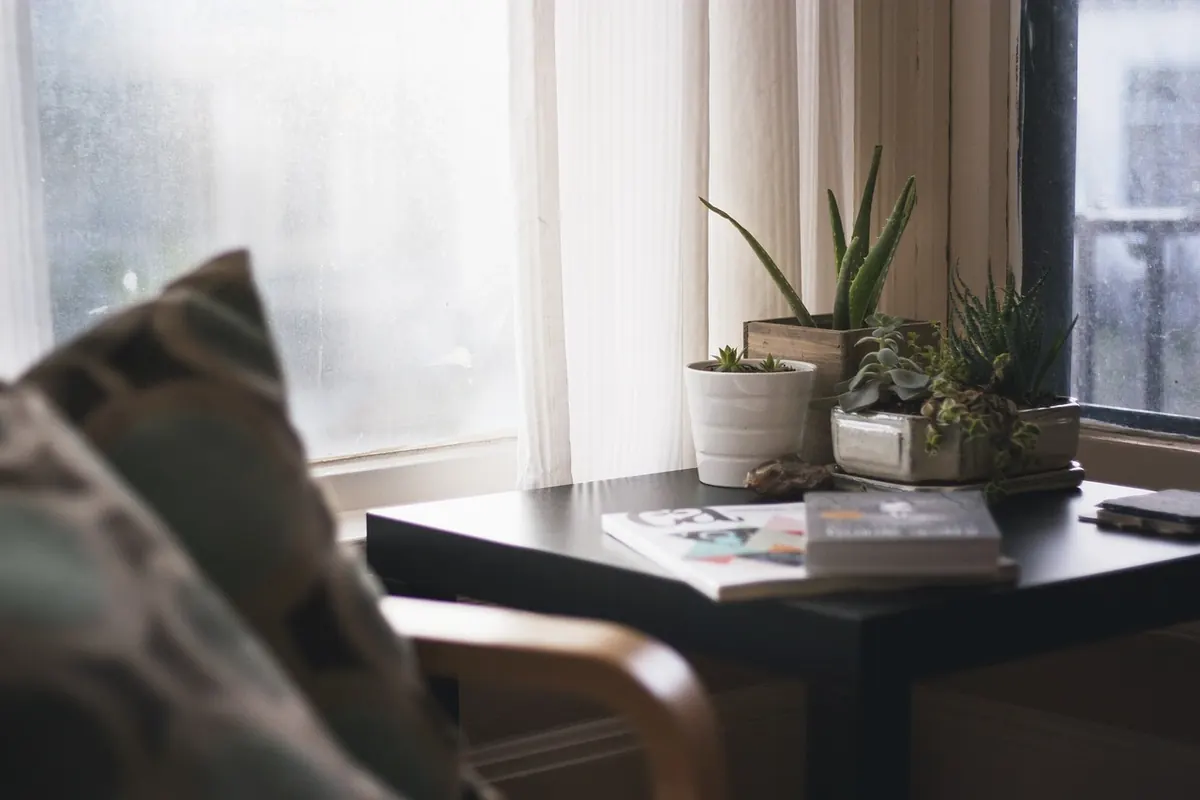
A small cottage living room can carry pattern, texture and a little romance better than a stark modern box, but it punishes excess. The trick is not simply to choose fewer things. It is to give every piece a clear job. Window treatments and textiles do much of the visual work in a compact room: they soften hard edges, filter light and tie the seating together. Get their proportions and relationship right, and the room feels layered rather than packed. Treat curtains, blinds, rugs and cushions as one family, not a matching set, and the result is calm, practical and full of character.
Begin with the Window’s Job
Before you browse fabric, stand in the room at three times of day: morning, late afternoon and after dark. Notice where the light lands, whether neighbours can see in, and whether the window feels like a hole in the wall or a feature worth framing. A cottage window often has a deep sill, an uneven recess or a low head, and those quirks should shape the treatment rather than fight it.
Decide what the window must do first. Privacy, glare control, warmth and a better view are different problems. If the view is good, keep the glass as clear as possible and use a slim blind or simple curtains that stack well to the sides. If the room is overlooked, a sheer curtain or a café curtain gives daytime privacy without turning the room into a box. If the window is draughty, a lined curtain will do more than a flimsy blind. Choose one lead treatment, then add a second only if it solves a real problem.
Layer Curtains and Blinds Without Bulk
Layering works best when there is a hierarchy. Let the blind handle privacy and light control, and let the curtains add softness, insulation and a finished edge. Mount the blind close to the glass, inside the recess where possible, and hang the curtains outside the recess on a slim rod or track. This keeps the window from feeling blocked while still giving you the cottage softness people expect.
Avoid deep pelmets, heavy valances and chunky hardware in a small room. They eat visual space above the window and make low ceilings feel lower. Slim rods, simple rings and a neat track are easier on the eye. If you want pattern, put it on the curtain and keep the blind plain, or reverse that logic. Two busy patterns fighting for the same square metre rarely end well.
Pairing recipes that work
- Sheer linen curtains with a flat Roman blind: use a warm neutral for both. The sheer softens daylight; the blind provides privacy at night.
- Café curtains with a simple roller blind: good for a street-facing cottage window. The lower curtain gives charm and privacy; the roller controls light without covering the top of the glass.
- Pencil-pleat cotton curtains with a pale wooden slat blind: the slats add texture and let you tilt the light, while the curtains soften the edges. Keep the wood pale so the window does not become a dark patch.
- Floor-length lined curtains with a close-fitting roller blind: the most practical pairing for a draughty or cold window. Keep the curtain fabric plain or subtly striped so the volume does not dominate.
Pick Fabrics That Hold Their Own
In a compact room, medium-weight fabrics are usually easier to live with than heavy velvet or stiff synthetics. Linen, cotton canvas, ticking, wool, corduroy and linen blends drape well, show texture and do not swallow the light. A heavy fabric can work as a small cushion or a throw, but floor-length velvet curtains in a tiny room can feel like a stage curtain coming down.
Pattern scale matters more than pattern quantity. One larger print can be enough for the whole room; pair it with a ticking stripe, a small check or a plain weave. Cottage style does not mean every surface needs a floral. A soft sage wall, oat-coloured curtains, a clay-red cushion and a faded charcoal throw will feel more considered than five different prints in similar colours.
Hold swatches against the wall in morning and evening light. A cream that looks clean at noon can turn grey at dusk, and a green that seems gentle on a screen can go sharp beside a warm rug. If you are having curtains made, line them. Lining improves the drape, protects the fabric from sunlight and makes the window look more substantial without adding bulk to the room.
Nail the Proportions
Small rooms benefit from generous proportions at the window. Hang curtains roughly 10–15 cm above the frame and extend the rod 15–20 cm beyond each side. This exposes more wall, makes the opening look wider and gives the curtains somewhere to stack when open. In a low-ceilinged cottage, a ceiling-mounted track can add height if the architecture allows it, but keep the track slim and the pleats neat.
Let living-room curtains reach the floor or just kiss it. Sill-length curtains can look tidy in a kitchen or home office, but in a sitting room they often chop the wall and make the window feel smaller. Check radiators, sofas and lamp tables before you commit. Curtains need breathing room at the sides; a sofa pushed tight against the window will crush the fabric and make the room feel narrower.
With blinds, measure the drop carefully. A Roman blind that stacks too deep will cover half the glass even when raised. A roller blind should clear the top of the window without leaving a wide light gap. If the window recess is shallow, choose a blind that sits close to the glass and keep the curtains outside it. Good measurements are less expensive than a second attempt.
Carry the Palette Into the Room
Window treatments should not be the only textiles in the conversation. Start with the rug, because it sets the floor area and often the colour mood. In a small living room, a rug that sits under the front legs of the sofa and chairs will make the seating feel intentional; a postage-stamp rug in the middle of the floor makes the room look more fragmented.
Then edit the soft furnishings. Three to five cushions are usually enough on a two-seater sofa: mix one pattern, one texture and one solid. Add a single throw rather than a pile of them. Repeat a colour at least twice in the room, but do not repeat every fabric. If the curtains are striped, let a cushion pick up the stripe colour and leave the sofa plain. If the sofa is patterned, keep the curtains quiet and use texture, not more print, to add interest.
The goal is not a matched set but a family of fabrics that share a mood.
Use the same fabric on a small stool, a blind or a cushion if you want a pulled-together look without matching everything. A length of ticking made into a cushion cover can tie back to café curtains. A remnant of curtain linen can cover a bench seat. These small repeats make a compact room feel deliberate.
Edit for Breathing Room
Small rooms become crowded visually before they become crowded physically. Keep the windowsill clear apart from one object: a small lamp, a single plant or a bowl. Let the wall around the window stay quiet. One well-placed picture beside the curtains will do more than a cluster of small frames fighting the fabric pattern.
Choose furniture with visible legs where you can. Low-profile sofas and open chairs keep sightlines clear, and a slim console under a window can be useful without blocking light. Leave a clear walkway between seating and the window so curtains can fall without being brushed aside. If the room feels busy, remove one cushion, one ornament and one small rug before you buy anything new. The answer is often less, but better placed.
A Practical Styling Sequence
Work in this order: identify the window’s main job, choose one lead treatment, add a second only if it earns its place, then pull two or three colours from the rug or sofa into the fabrics. Measure before you buy, live with the swatches for a day, and leave a little bare wall around the window. A small cottage living room does not need fewer layers so much as layers with space between them. When the curtains fall cleanly, the blind sits flush and the cushions feel chosen rather than collected, the room will feel finished, not full.
Photo: karishea / Pixabay